Trimmers
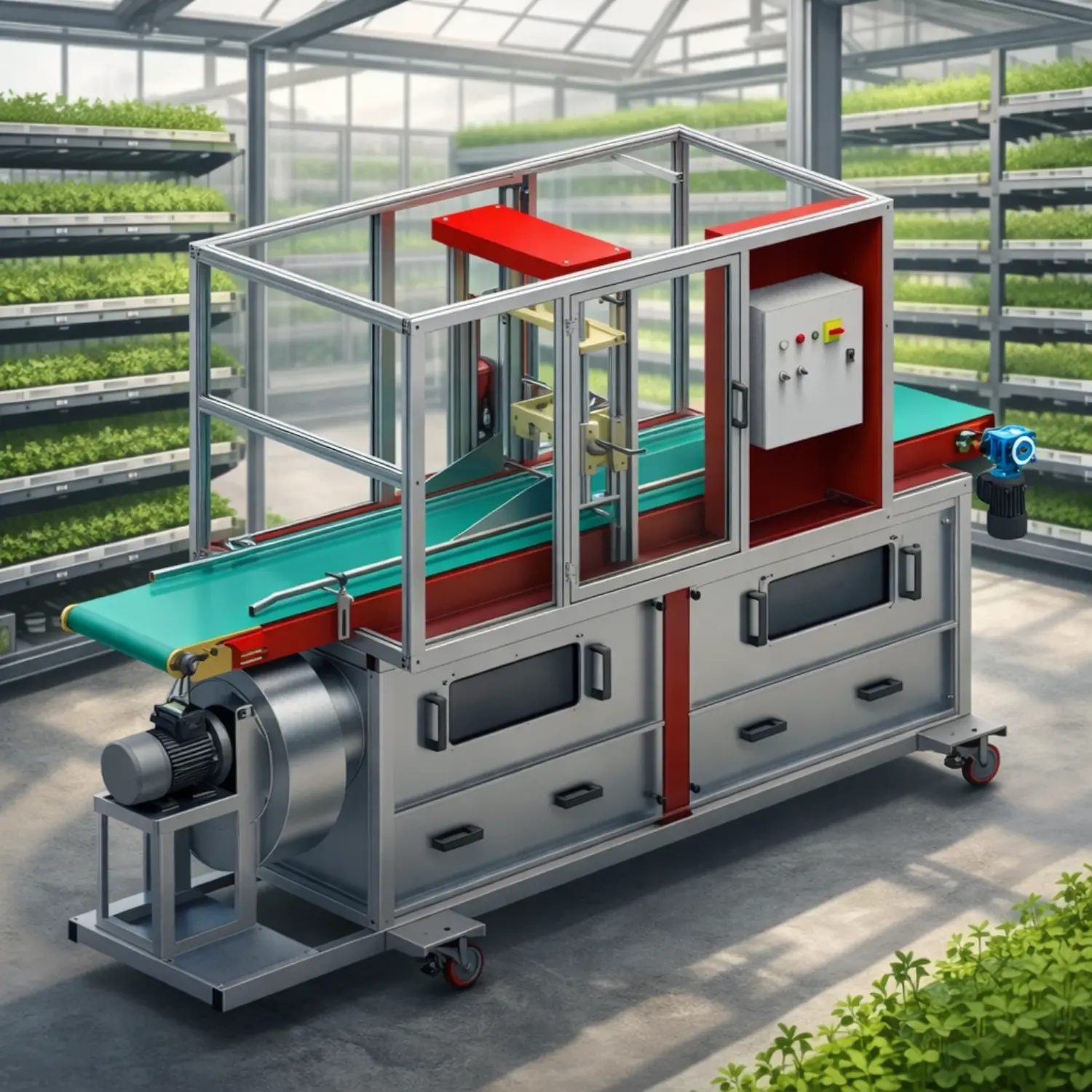
Automated trimmers provide a standardized method for managing foliage density and plant height within commercial nursery and greenhouse environments. These systems are engineered to deliver precise, repeatable cuts across large batches of containers, ensuring uniform crop presentation and stimulating healthy vegetative development.
System Overview
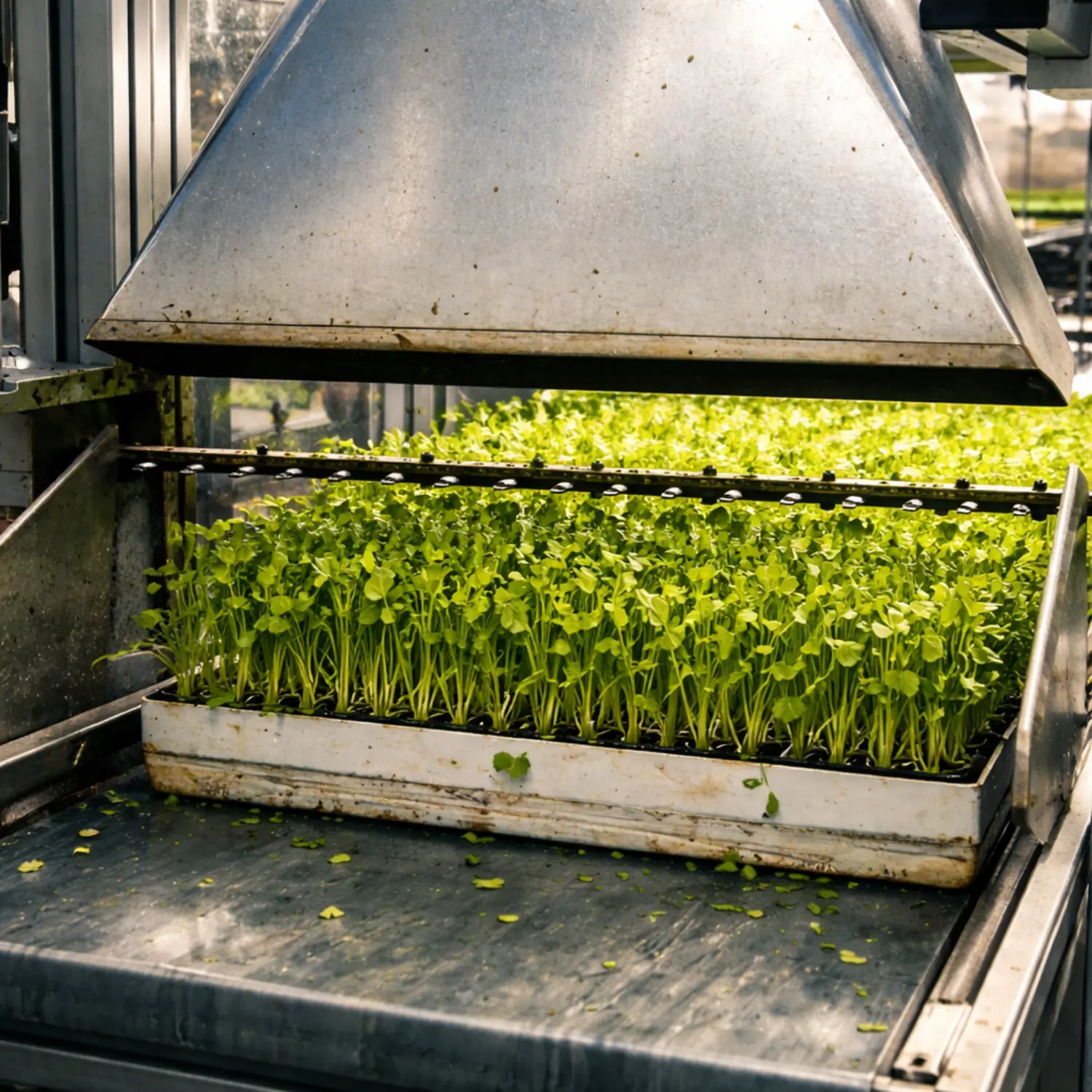
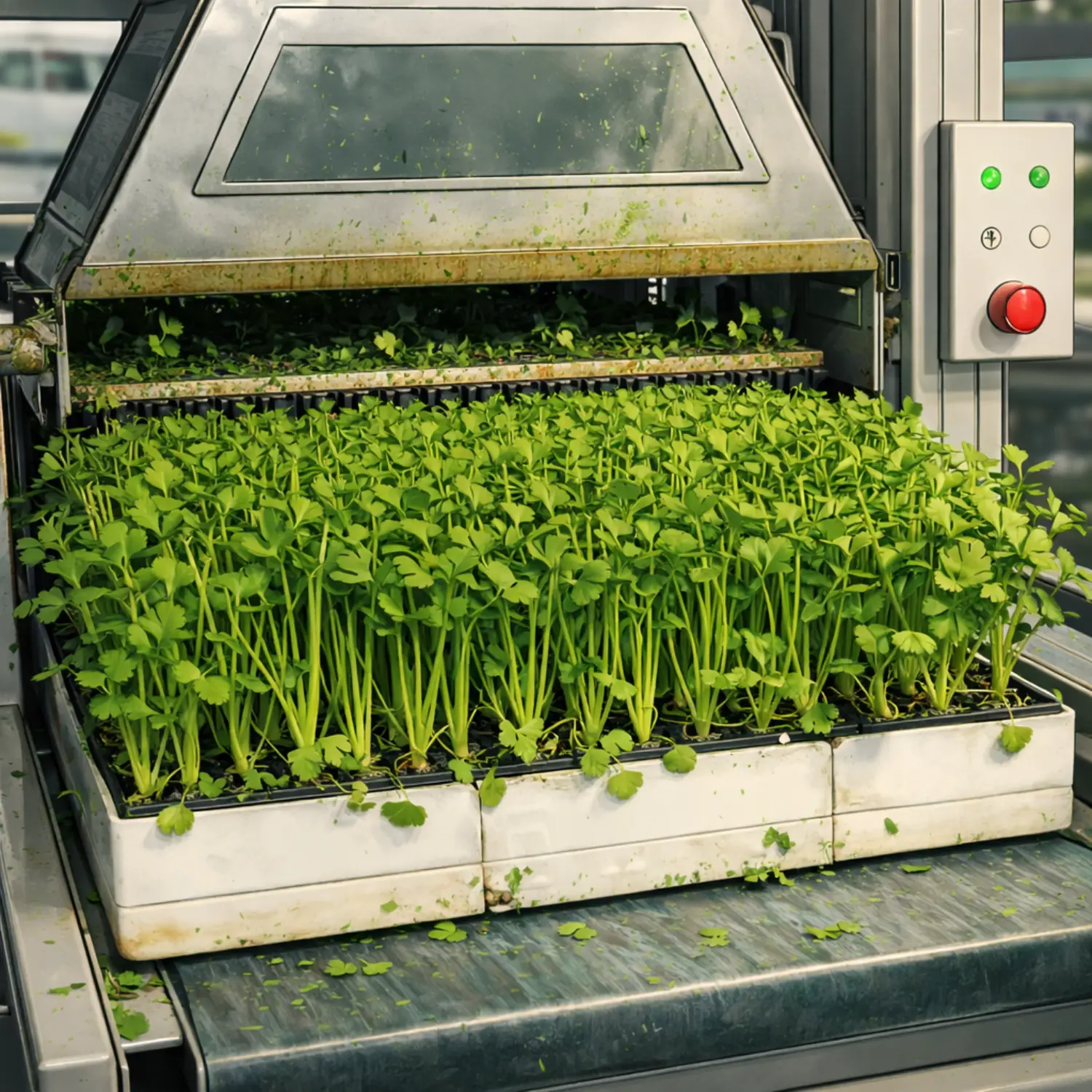
Industrial trimming equipment utilizes either high-speed rotating blades or reciprocating straight-blade systems to achieve clean, burr-free cuts. These machines are integrated into existing production lines, featuring adjustable conveyor speeds and cutting heights to accommodate various tray dimensions and crop stages.
The integration of high-velocity suction systems is a critical component of modern trimmers, as it prevents plant debris from settling back onto the crop. By capturing trimmings in dedicated collection drawers or mesh filters, these systems mitigate the risk of mold or mucilage formation while allowing for the hygienic recovery of material for propagation purposes.
Key Benefits for Professional Use
Process Standardization: Achieves uniform plant height and density across high-volume batches, essential for retail readiness and automated downstream processing.
Pathogen Reduction: Integrated suction and filtration systems remove organic waste immediately, reducing the humidity and debris that harbor fungal pathogens.
Operational Efficiency: Replaces manual pruning with high-throughput automation, capable of processing between 200 and 800 containers per hour.
Adjustable Precision: Electronic controls for blade speed and height allow for fine-tuned calibration based on specific cultivar requirements or growth stages.
Reliability in Continuous Operation: Designed for industrial duty cycles with simplified maintenance access to ensure long-term uptime in demanding nursery workflows.
Typical Applications
Young Plant Production: Uniform topping of vegetable starts—such as onions, celery, and fennel—to encourage sturdy stem development.
Aromatic Herb Cultivation: Precision harvesting or maintenance of rosemary, mint, and other herbs where clean cuts are required for regrowth.
Nursery Propagation: Utilizing trimmers to collect healthy cuttings for secondary propagation while simultaneously shaping the parent stock.
Flowering Plant Maintenance: Managing the canopy of ornamental crops to ensure consistent light penetration and air circulation.
Post-Harvest Preparation: Standardizing foliage length prior to packaging and distribution to meet strict retail specifications.
Technical Consultation and Project Support
Successful implementation of automated plant cutters requires careful consideration of tray compatibility, throughput requirements, and existing line integration. We provide technical support to assist in the selection of blade geometries and collection systems that align with your specific production layouts. Our team is available to discuss scalability and the integration of trimming units into comprehensive automated workflows.
Need help? Contact us
For personalized assistance or inquiries, our dedicated team is here to help. We’re committed to providing you with exceptional support and guidance, ensuring that all your needs are met efficiently and professionally.